The Future Of Remote Work Technology
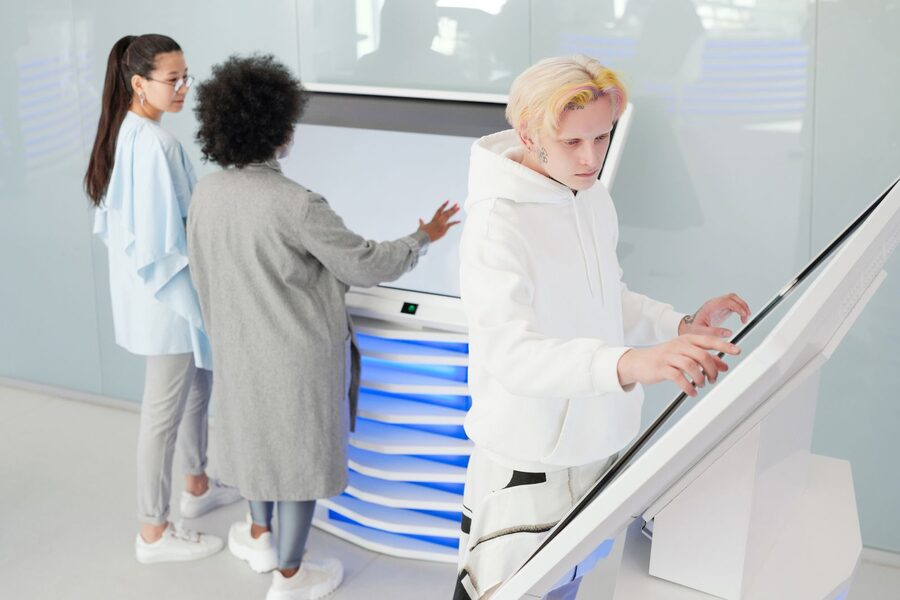
Here is a look at the future of remote work technology. Future of remote work technology: Advancements in digital tools, platforms, AI, cloud systems, and communication technologies that facilitate effective working from a distance. It aims to enhance collaboration, productivity, security, communication and employee experience without forcing employees to work from the same office. With the increasing flexibility in business models, remote work technology is set to become more intelligent, connected, secure and user-friendly. These modifications will enable enterprises to maintain distant staff and provide staff with increased work place flexibility.
Home working has gone from a temporary arrangement to a permanent fixture in business today. There are many companies nowadays where staff members work remotely, at coworking offices, in other cities and even in other countries. This change has driven the need for improved technology.
For the initial deployment of remote work, communication was largely via email, video conferencing and simple file sharing applications. The business world today has at their disposal cloud platforms, project management systems, virtual meeting rooms, virtual tools, and AI. These technologies are transforming the way teams communicate and accomplish their daily work.
It’s not just a matter of more software going into the future of remote work technology. It will be about connecting and managing work, or making them that way. Businesses will require technology to enhance productivity, and at the same time safeguard data and promote a healthy employee experience.
How Remote Work Technology Is Changing
Businesses are finding out what distributed teams need and remote work technology is advancing rapidly. Many organizations are developing systems that are designed to accommodate remote and hybrid teams, rather than as an option to work from the office.
One such factor is cloud computing. Documents, applications, databases and business systems can be accessed by the employee from just about anywhere with an Internet connection. This decreases the reliance on in-office infrastructure.
The communication technology is also gaining ground. Now, video conferencing is just a piece of the digital collaboration puzzle. Today’s platforms are a unified messaging, file sharing, task management, calendars, and meetings space.
These are some of the key trends that will impact the future:
- Cloud-based work: Offers workers access to business applications and files from anywhere.
- Automation: AI can handle repetitive tasks, transcribe meetings, digest data, and aid in decision-making.
- Automation: Repetitive administrative tasks can be performed increasingly without manual effort.
- Virtual collaboration: Digital workspaces can facilitate remote employees to work and communicate more naturally.
- Better cyber protection: Companies are investing in better systems to secure their remote devices and company data.
- Employee analytics: Data can be used to gain insights into workflow and determine which areas require team support.
- Flexible work platforms: Businesses are embracing tools that enable both remote and hybrid working.
The evolution of these changes mean that the technology of remote work will move from an individual application to a connected digital work environment.
The Role Of Artificial Intelligence In Remote Work
AI will be a one of the most significant impacts on the future of remote work technology. By automating repetitive tasks, AI can free up more time for employees to engage in tasks that call for judgment and creativity.
For instance, an AI tool can capture the essence of a lengthy online conversation and pinpoint key decisions or subsequent actions. It can also be used to structure information, compose standard texts, review documents, or to respond to frequently asked questions in-house.
AI can also enhance inter-team communication. It can be difficult for workers in different time zones to arrange meetings. Intelligent scheduling systems can be used to see if a time is appropriate with working schedules and calendar data.
Another noteworthy usage is workflow automation. AI-driven automation can streamline various tasks, eliminating the need for manual data transfer between systems.
However, AI will not eliminate the need for human employees. It will be used to complement, not supplant, workers, in many cases.
There will be a need for businesses to carefully consider how AI can be utilised. Staff should be aware of when AI is offering recommendations and when it requires human judgment. Security of data and data quality will continue to be significant issues.
AI systems that seamlessly integrate into current workflows will likely prove the most valuable.
Virtual Collaboration And The Digital Workplace
A difficulty with working remotely is establishing the connection people enjoy within an office environment. The employees are able to send messages and have video meetings, but just like in person, digital communication is not always the same experience.
This experience will be improved upon in the future with remote work technology.
Virtual collaboration platforms can get more “hands-on. Rather than holding a regular video conference, employees can co-work in virtual environments where they can concurrently view documents, convey ideas, organize tasks, and engage in a conversation with shared content and information.
There might be a place for VR/AR. These technologies can enable staff to join into virtual meetings in a virtual environment that appears to be more interactive than a traditional conference call.
But, using immersive technology isn’t an option for businesses because they have it. The technology must be able to address an actual problem. A video call might be appropriate for a brief conversation, or a virtual environment could be helpful for training, design, simulation or complicated collaboration.
The digital workplace of the future will likely provide various communication channels for various tasks. There are options of messaging, voice calls, video meetings, shared documents, and virtual spaces for employees to select from
Cybersecurity Will Become Even More Important
This is because there are more people working out of the traditional office environment, making cybersecurity a greater challenge. Employees are not guaranteed to be connected from a controlled office network.
Remote employees can connect to home Wi-Fi, personal equipment, public Wi-Fi and various sites. Every connection can present a potential security hazard.
The coming years, therefore, will present even greater development opportunities for the technology of remote work, which will need even more robust security measures that won’t make the work itself cumbersome.
One method that is gaining traction is known as zero-trust security. Zero-trust systems don’t assume that someone or something is safe just because they are inside a company network—they continuously check access based on a variety of factors, including identity, device status and permissions.
Setting a password and using it to prevent unauthorized access;Not sharing a password with anyone else:
- Multi-factor authentication
- Secure cloud storage
- Device management
- Data encryption
- Regular software updates
- Employee security training
- Access controls, depending on role within the company.
- Account Surveillance for abnormal activity
Another potential use of AI is identifying suspicious activity. Security systems, for instance, can detect any unusual login patterns or access to sensitive information.
Balancing security and convenience will be the challenge. If the security devices interfere with the way the work is done, the employee may find ways to circumvent them. Ideally, the security approach used remotely should be as effective in securing the business as well as being manageable for staff.
Productivity, Automation, And Employee Experience
The productivity of remote workers is not just about getting them to work quicker. It’s also about helping them to engage in worthwhile activities.
Lots of meetings, needless notifications, duplicate administrative work, and less-than-ideal software integration can make the remote experience frustrating. These issues must be resolved with future technology.
Many repetitive tasks can be eliminated with automation. A company can extract the following from the invoice:A company can extract the following from the invoice: This, in turn, can allow staff to concentrate on activities which call for human decision making.
However, remote work platforms can also be improved to better identify what it is that needs employees’ attention. Workers could be notified of a list of important tasks rather than dozens of notifications.
This may have a significant impact on the employee experience.
Businesses will also have to steer clear of over monitoring employees. The amount of mouse clicking one does while sitting at a computer or how much time one spends sitting in front of a computer is not a good indicator of actual useful work accomplished.
Instead, a healthier thought to adopt is to concentrate on outcomes. Project milestones, deadlines, quality standards and team communication can help a manager to conclude how well a project is going.
The technology of remote working should therefore promote trust, not add to it.
What Businesses Should Expect From Future Remote Work Technology
Businesses should consider more than purchasing software packages. The larger goal should be to have a technology environment that is connected.
Various systems must function together. Workers should not need to re-enter the same data into multiple applications nor constantly navigate between platforms that don’t connect.
Businesses need to take a few things into account when selecting technology:
Integration: The new tools must be compatible with existing tools.
Security: There should be robust authentication and access control for remote access.
Easy to use: The technology should be easy to use for employees without a lot of training.
Scalability: As the business expands, the system must keep on operating.
Accessibility: Tools need to be able to facilitate workers with various devices and environments.
Subscription rates and time needed to manage each platform are important factors to consider when evaluating the cost.
Needs of the employees: Technology should address real workplace issues, not complicate things.
Regular assessment of the technology stack should be done also by the companies. After some time a business might have incorporated too many applications. Sometimes it’s better to take away tools, rather than add them.
Training will continue to be a significant factor, too. With any powerful platform, if employees are not informed about its usage appropriately then it is of little value.
For wider workplace trends, see the World Economic Forum’s Future of Jobs Report 2025. You may also like our guides on how technology helps remote teams work better, best technology practices for remote businesses and how collaboration tools improve team productivity.
Final Thoughts
Artificial intelligence, Cloud Computing, automation, cyber security and improved collaboration platforms will drive the future of remote work technology. These technologies will allow staff to be able to work in different locations and remain connected to their team and organisation.
However, technology is not the key to the success or failure of remote working. Communication, realistic expectations, good management and trust are all vital in companies.
The optimum remote work technology goes beyond connecting employees. It will make their working easier. It will help to minimize repetitive tasks, secure vital data, enhance collaboration, and provide employees with more control over their working schedule’s organization.
Businesses that select practical technology and integrate it with effective work practices will be better equipped for a world of work that is evolving and increasingly remote/hybrid. The purpose is to not duplicate the old office environment online. It’s about establishing a digital workplace that succeeds in any place. This is the future of remote work technology.

David is the founder of devotionnest.com, a site dedicated to Bible Verses and clever wordplay. He loves turning language into laughter and making words wonderfully witty.

Leave a Reply